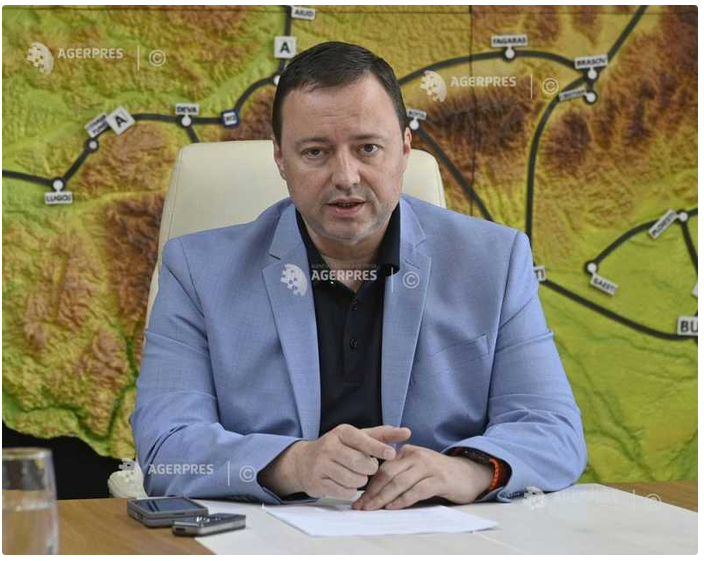

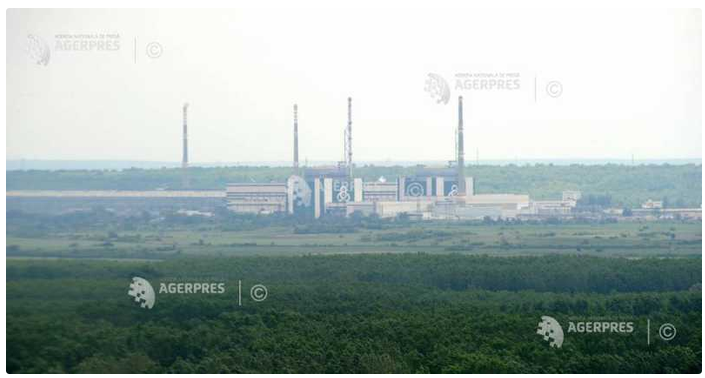
The scheduled shutdown of Unit 6 at Bulgaria's Kozloduy nuclear power plant, starting on Thursday for annual maintenance and refuelling, is increasing pressure on Romania's energy system, as electricity consumption rises during the evening hours while domestic production does not always cover demand, Dumitru Chisalita, chairman of the Intelligent Energy Association (AEI), said.
'Today, October 8 2026, Unit 6 at the Kozloduy nuclear power plant is scheduled to shut down for annual maintenance and refuelling. It is expected to return to operation at the end of November. Unit 5 continues to operate, but its output is dependent on the level of the Danube and the availability of the water needed by the plant. This is a planned shutdown, but its timing complicates the energy balance of the region and, consequently, of Romania. The temporary withdrawal of a generating unit with a capacity of around 1,000 MW reduces available generation at a time when days are getting shorter, temperatures may fall and evening consumption is increasing. Romania must view this change in the context of its own dependence on imports during hours when domestic production does not cover demand,' Dumitru Chisalita said in an analysis sent on Thursday.
According to him, the need for imported energy may increase when several countries in the region simultaneously record high consumption.
'If colder weather affects Romania, Hungary and the Balkans at the same time, regional demand increases. If weak winds and plant outages are added to this, the surpluses available for export are reduced. Under these circumstances, imports become more expensive and harder to secure,' the AEI chairman explained.
In his analysis, Chisalita presents a scenario in which Romania could need imports of 2,700 MW during the evening hours.
According to the data presented, recent hourly profiles indicate evening consumption of approximately 6,400-6,700 MW in Romania, 5,400-5,600 MW in Hungary and around 4,000 MW in Serbia. These figures are historical reference points, not forecasts for Thursday.
At the same time, the regional scenario drawn up by AEI indicates a cumulative generation shortfall of approximately 6,400 MW for the Central and South-Eastern European countries analysed, taking into account the shutdown of Kozloduy Unit 6.
The AEI chairman warns that the security of the energy system also depends on having sufficient reserves in the event of outages.
'Moreover, balancing generation with demand does not exhaust the issue of security. The system must retain reserves to cope with the unexpected loss of a generating unit or transmission link. A balance that closes at the limit can become vulnerable to the first outage,' Chisalita stressed.
In his view, Romania can cover electricity demand on most October evenings, but certain weather and technical conditions could reduce the safety margin.
As regards the economic impact, he believes that the reduction in available generation in the region could lead to higher electricity prices during peak hours.
Chisalita argues that the authorities should have presented a balance sheet of the resources available to cover consumption during difficult periods.
'The authorities should have publicly presented a credible balance for difficult evenings: available generation, feasible imports, reserves and measures to deal with an additional outage. Installed capacity and monthly averages do not answer this question. The Kozloduy maintenance shutdown was known about. That is precisely why Romania should have prepared for it. Energy security is measured by the ability to cover the difficult hour at an affordable cost,' the chairman of the Intelligent Energy Association added. (RO - writing by: Nicoleta Banciulea; EN - writing by: Cristina Zaharia)
- Category: English
- Date: 2026-10-08 13:24:31
- Foto: Simion MECHNO / AGERPRES Photo