

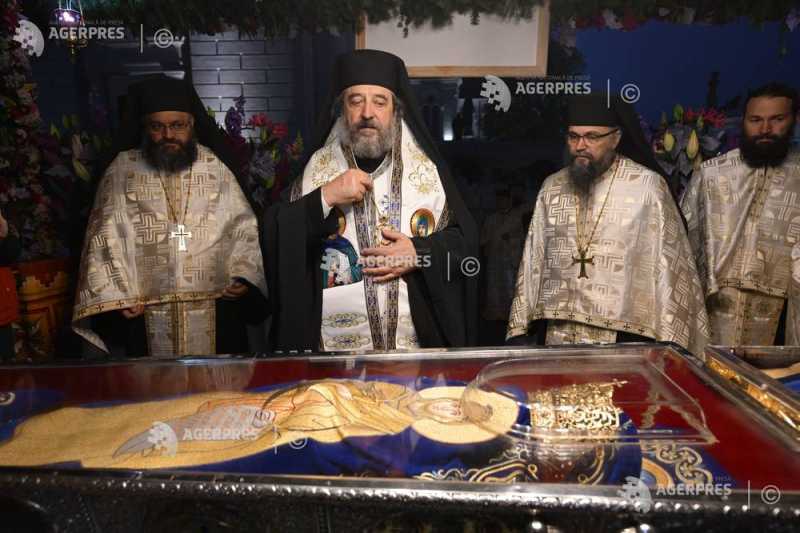
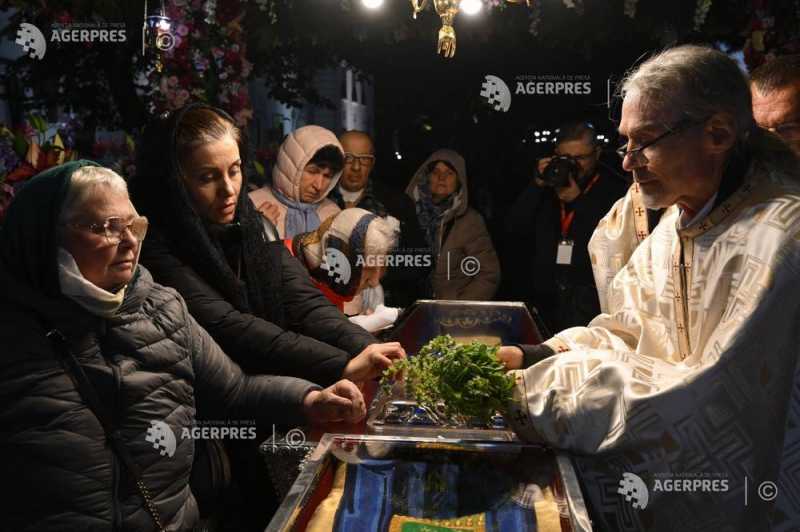
The casket containing the relics of Venerable Saint Parascheva was taken out of the Metropolitan Cathedral on Tuesday morning and placed in a specially arranged canopy in the Metropolitan Courtyard, so that pilgrims who have arrived in Iasi can venerate the relics.
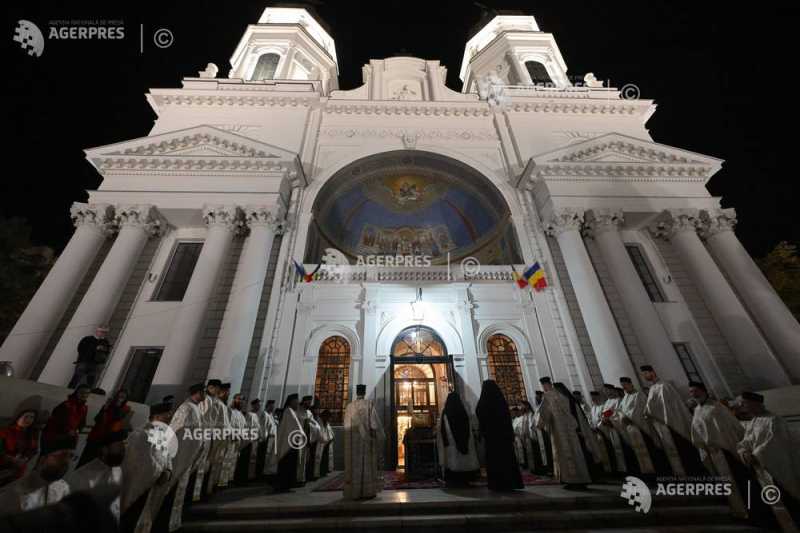
At around 06:00, the Akathist to Saint Parascheva was read in the Metropolitan Cathedral. Afterwards, a group of priests led by Nichifor Botosaneanul, auxiliary bishop of the Archdiocese of Iasi, offered prayers and took part in the procession carrying the relics of Venerable Saint Parascheva.
After the procession, the casket containing the holy relics was placed in a specially arranged canopy in the Metropolitan Courtyard for the faithful to venerate.
Thousands of pilgrims took part in the procession. Most of them are from Voluntari and were brought to Iasi on 160 coaches.
In the following hours, priests will conduct the service for the blessing of water and the Holy Unction service, as well as the Divine Liturgy.
Pilgrims who come in the coming days to venerate the relics of Saint Parascheva will also be able to venerate the relics of Venerable Saint Paisius of Sihastria.
'(...) Our pilgrimage is an act of faith, beloved faithful. It is a step towards the Lord. (...) May this journey that we make every year, dedicated to Saint Parascheva, with pilgrims from across the country, with every step be towards our spiritual growth, towards the conviction that God has a purpose for us, but also towards the good resolution to become comforters to others ourselves, through a word, a good deed, patience, the wisdom not to become discouraged and to call upon God in our lives and in the history of our country to the very end, so that He may sanctify us, overcome all evil and cleanse us of all that may have been wrong in our lives. May God help us! May you be blessed!,' said Nichifor Botosaneanul, auxiliary bishop of the Archdiocese of Iasi, in his address.
Known in the past also as Saint Friday, Venerable Parascheva is considered the protector of Moldavia and of the poor.
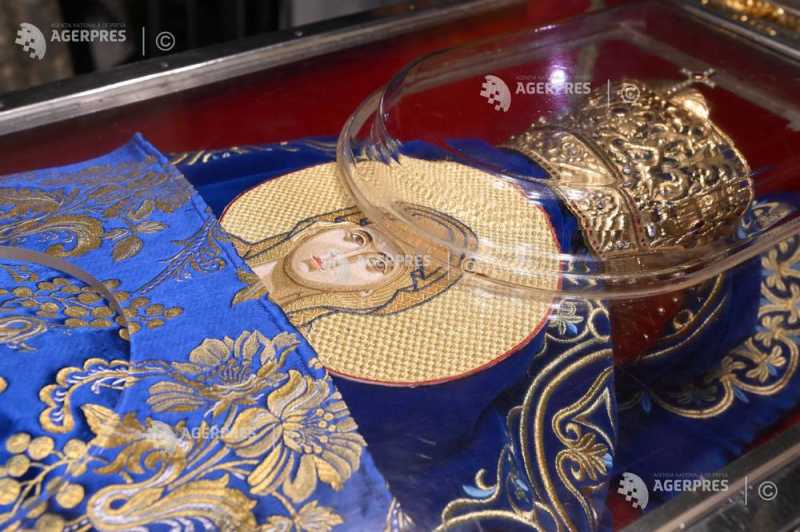
She was born in the town of Epivat, today Cap Kaliakra, in Thrace, on the shores of the Sea of Marmara, in the first half of the 11th century. She is believed to have died at the age of 27 in her native village. The relics of Venerable Parascheva were kept for almost 200 years in a church in Epivat, then in Tarnovo, and in the 16th century they were taken to Constantinople.
On 13 June 1641, Voivode Vasile Lupu succeeded in bringing them to Iasi, placing them in the church of the Three Holy Hierarchs Monastery.
The casket of Saint Parascheva was moved to the Metropolitan Cathedral at the end of the 19th century, in 1888, after the relics survived unscathed the fire at the Three Holy Hierarchs Church. Since then, the relics of Venerable Parascheva have been kept at the Metropolitan Cathedral in Iasi.
The first known teaching in Romanian about the life of Venerable Saint Parascheva is found in the 'Romanian Book of Teachings' (Cazania) by Metropolitan priest Varlaam of Moldavia, printed in Iasi in 1643.
Venerable Parascheva is worshiped throughout the Orthodox Church, with her cult particularly widespread in Romanian, Greek, Bulgarian, Serbian and Russian lands. In 1950, the Holy Synod of the Romanian Orthodox Church decided to extend her veneration throughout the Romanian Orthodox Church, with the solemn proclamation taking place in Iasi on 14 October 1955. The veneration of Saint Parascheva and her feast day on 14 October, however, date back much further. AGERPRES (RO - writing by: Daniela Malache; EN - writing by: Adina Panaitescu)
Photos: Adrian CUBA / AGERPRES Foto
Display count: 93