
More than 30 rare photographs taken by Constantin Brancusi will be exhibited for the first time in Targu Jiu on October 22, as Romania marks the Year of Brancusi and the 150th anniversary of the sculptor's birth, according to a press release issued on Monday by the Constantin Brancusi Research, Documentation and Promotion Centre in this city.
The exhibition opening will mark the start of the international conference 'The Philosophy of Form', held under the patronage of UNESCO. Over four days, the conference will bring together in Targu Jiu leading specialists in Brancusi's work from around the world.
The exhibition, entitled 'Brancusi. Photography. The Invisible Studio', brings together 33 rare photographs taken by Constantin Brancusi from the David Grob collection.
The exhibition is curated by art historian Eduard Enache, with Doina Lemny, PhD, the leading researcher in the field, serving as scientific adviser.
'For a long time, Brancusi's photographs were regarded as mere footnotes to his sculpture. Today, we read them as the language through which Brancusi speaks to us about his own creative work; I would even say that they are the studio itself, continued in another medium. The David Grob collection is exceptional precisely because it began to take shape in the 1970s, when these images were not yet regarded as works of art in their own right. It reveals a Brancusi who enjoyed photography, experimented, painstakingly composed each image and seemed to understand that photography would preserve the memory of sculptures destined to be lost or damaged. Some of these images were taken in Targu Jiu and are now returning here, almost 90 years later, to the place where the thinking developed in the studio left the enclosed space and encountered the sky,' exhibition curator Eduard Enache said, according to the press release.
A particularly special feature of the exhibition opening will be the presence in Tsrgu Jiu of David Grob, the British collector whose collection the photographs come from.
'The 33 photographs are much more than simple historical documents. They allow us to look into Brancusi's studio, at his works and at the special relationship he developed between sculpture, space, light and photography. Brancusi photographed his own works and studio, developing the images in a darkroom he had built inside his studio at Impasse Ronsin in Paris. The selection in Targu Jiu includes self-portraits, photographs of sculptures, studio scenes and still lifes. Among other things, visitors will be able to see the first images of the Endless Column installed at Voulangis, near Paris. Films made in the studio will also be shown alongside the photographs. The exhibition will additionally feature photographs Brancusi took in Targu Jiu of the Endless Column and the monumental ensemble erected here in 1937-1938,' the same source added.
The curatorial concept is based on the observation that Brancusi's studio, where sculptures and plinths were constantly rearranged, now survives only as a reconstruction in a single arrangement.
The other installations have been preserved only in photographs. The exhibition proposes that these images be viewed as a second, invisible studio, in which Brancusi repeated the gestures he made in his actual studio: placing one work beside another, changing a plinth and waiting for the right light.
'We are delighted to have succeeded in bringing this exhibition to Targu Jiu and that, through events of this kind, we continue to strengthen our city's position as an international landmark of Brancusi's art. Mr Grob's presence at the opening is also a special occasion and a recognition of the value Brancusi's heritage holds for Targu Jiu and the world,' said Adrian Tudor, deputy mayor of Targu Jiu.
The exhibition is organised by Targu Jiu City Hall, Constantin Brancusi University of Targu Jiu, and the Constantin Brancusi Research, Documentation and Promotion Centre in Targu Jiu.
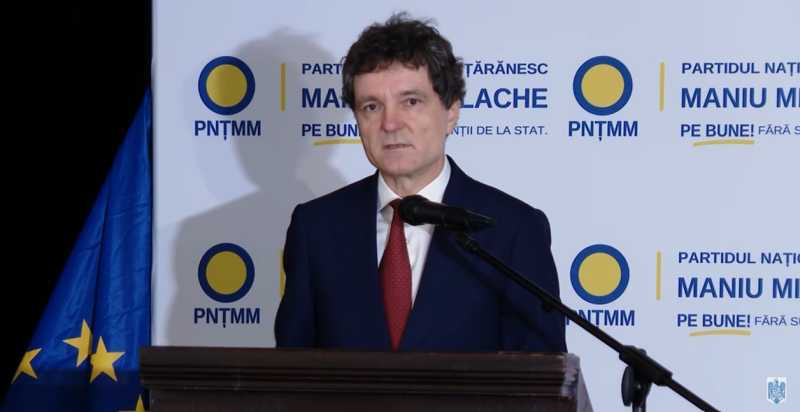
'On the 150th anniversary of Brancusi's birth, we have heard repeatedly this nationalist slogan: ‘Let's bring Brancusi home!' As if he were not already here, in Targu Jiu, through his major works. We should learn at least one thing from them: MEASURE. The measure of all things and all behaviour. The golden proportion of the world! We can see this proportion in the photographs featured in this exhibition, too,' said Cornel Mihalache, director of the Constantin Brancusi Research, Documentation and Promotion Centre. AGERPRES (RO - writing by: Oana Popescu; EN - writing by: Cristina Zaharia)
- Category: English
- Date: 2026-10-12 12:37:31